Warm Mix Asphalt
Improved sustainability due to temperature reduction
The use of aspha-min® reduces the mixing and laying temperatures of asphalt by about 30 °C. This means saving resources due to lower energy consumption and less wear and tear of asphalt plants and on-site construction machinery. Moreover, reducing the asphalt's mixing temperature reduces thermal stress to binder, aggregate and additives. It also significantly improves the working conditions of construction staff because of lower emission rates for fumes, aerosols, and odour.
Lower emission rates Advantages of warm mix asphalt with aspha-min®
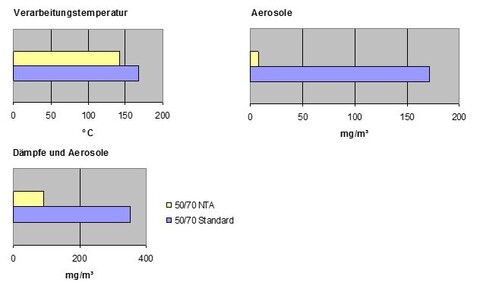
aspha-min® allows asphalt to be mixed and paved at significantly reduced temperatures, resulting in a substantial decrease in energy consumption and markedly reduced thermal stress on both the binder and equipment.
Lower consumption of fossil fuels leads to a significant reduction in emissions of carbon dioxide (CO₂), nitrogen oxides (NO2), and volatile organic compounds (VOCs) during asphalt production.
At the paving site, reduced asphalt temperatures notably improve working conditions by decreasing odour, vapour, and aerosol exposure.
Measurements obtained during field trials have shown that the use of aspha-min®, in the light of reduced paving temperatures, results in a substantial decrease in bitumen vapours and aerosols. For example, reducing the mixing temperature by 26 °C achieved a 74 % reduction in ultrafine particle emissions, accompanied by a noticeable reduction in odour.
Since November 2019, Germany has applied a much more stringent occupational exposure limit for vapours and aerosols from hot bitumen of 1.5 mg/m³. Although the obligation was temporarily suspended for five years, it must be fully considered in risk assessments from 2027 onwards.
Comprehensive compliance with this limit value can generally only be achieved through a combination of warm mix asphalt and paving equipment with effective vapour extraction systems.
Additional operational benefits of WMA with aspha-min® include significantly improved logistics for projects under extreme time constraints, such as airport paving, urban traffic corridors, and heavily trafficked highways that are increasingly constructed at night or under very short closure windows. Warm mix asphalt enables earlier opening to traffic.
In tramway track construction, particularly where timber sleeper tracks are used, reduced paving temperatures minimise tensile stresses in the steel rails.
Furthermore, all asphalt components experience lower thermal exposure, including polymers, fibres, and the bitumen itself—positively influencing the service life and durability of the asphalt pavement.
Application Guidelines



How can we assist you?
Get in touch with our experienced team and learn how we can provide safe and efficient products and solutions for your projects.